
https://www.nkcareercenter.org/events-list/kcc-career-fair-pendelton-county-library
Upcoming events.
It all begins with an idea. Maybe you want to launch a business. Maybe you want to turn a hobby into something more. Or maybe you have a creative project to share with the world. Whatever it is, the way you tell your story online can make all the difference.

Affordable housing is our region’s big challenge
Affordable housing is one of our top priorities for continued workforce development and economic growth.
It’s been just over a year since the Northern Kentucky Area Development District (NKADD) released its housing gap analysis in September 2023. The report looked deeply at the type of housing units available throughout NKADD’s eight-county region and found the inventory of available units is insufficient at all price points. In fact, Northern Kentucky needs 6,650 additional housing units over five years to keep up with its economic growth. At its current pace, workforce job creation is out-pacing workforce housing availability. This is a critical concern for workforce development because it is difficult to find and retain workers without appropriate housing to meet their needs. As NKADD Executive Director Tara Johnson-Noem shared an often repeated phrase in the workforce housing space, “Home is where jobs go to bed at night.”

Chart showing housing units relative to wages
The study specifically highlighted the need for more income-aligned homes – in other words, homes that meet the needs of the current and future residents based on price points that fit their budget. While the study found supply lacking at the highest price points as well, the need is greatest to support “workforce jobs,” which are positions with an average annual salary below $60,000. Currently, 60 percent of occupations inside our eight-county region fall into this range. Workforce jobs are held across age groups and life stage, including single people, empty-nesters, and young families. Based on this composition, the region needs a wider variety of housing types at various price points, including: rental, multi-family, and 1-2 bedroom single-family units.
One solution called out in the study is for smaller, attached, multi-family units in the form of townhomes, or other two-four unit homes that fit well in size and scale to single-family neighborhoods. While this style of development is common in older, first-ring suburban neighborhoods, they are often not allowed by newer zoning regulations. Targeting these “missing middle” homes would better account for the diversity of incomes as well as the smaller household sizes reflected in the current workforce while providing cost-effective opportunities for local developers to address the housing gaps shown in the study.
“Over the past five years, 62% of our new housing units have been 3- and 4-bedroom single-family homes. While many of us are at a point in our lives that we need that size home, plenty of other people are currently looking for something smaller, or a neighborhood that’s more walkable to amenities. The study shows that over the next five years, Northern Kentucky’s new development should more closely resemble our existing inventory – giving our community a greater spectrum of options,” Johnson-Noem said. The chart below shows the recommended composition.

Chart showing current stock of housing units by number of bedrooms
The full report is available here. It has been well received, and several work groups comprised of a wide variety of subject matter experts from fields in the residential development industry have started analyzing the results to determine how best to respond. This group will be hosting an event on November 18th to share insights and seek the input of local stakeholders about a menu of options drafted to provide private sector, local non-profits and communities potential strategies to address housing gaps. You can register to attend this free event here.
To discuss housing or workforce development in Northern Kentucky, contact NKY Works at 859.657.WRKS or NKYWorks@NKADD.org.

Talking about substance abuse is the first step in prevention
Talk about substance abuse with your children during Red Ribbon Week, October 23-31.

If you are the parent of a school-aged child, you will likely see activities for Red Ribbon Week between October 23rd and the 31st. Schools at all grade levels discuss the seriousness of drug abuse during Red Ribbon Week. It began in 1988 and is the nation’s largest drug-prevention campaign each year.
“When we talk about substance-abuse prevention, we focus on preventing the first use,” said Amanda Peters. Peters is the Director of the Northern KY Office of Drug Policy, which is housed at the Northern KY Area Development District (NKADD). Peters said that sharing age-appropriate information with children as early as possible has proven to impact substance use.
“We want to equip parents to talk openly to their children about the dangers of substance use. Ideally, children will feel comfortable discussing what they are seeing and experiencing before they are ever confronted with the opportunity to try drugs,” she said.
Preventing the first use is critical to stopping substance-related deaths in our area. “Because of the potency of substances available in Northern Kentucky, the ‘first use’ can unfortunately be fatal,” Peters added.
Peters referred to the US Drug Enforcement Administration’s (DEA) “One Pill Can Kill” website, which states 7 out of every 10 pills seized by the DEA contain a lethal dose of fentanyl. The site includes a Kentucky mother’s testimony about her son, Wyatt, who died from a fentanyl-laced pill. The six-and-a-half-minute story is powerful and worth sharing with your kids.
“Counterfeit pills are the scariest new development,” Peters said. “Drug dealers copy the look, color and size of common drugs, but lace them with fentanyl and other cheap synthetic substances. People who think they are just taking an Adderall (ADHD medication) from a friend have died from what may have seemed to the individual like a harmless thing.”
Peters said all eight counties in the NKADD region have robust prevention coalitions. Coalitions are teams of government, community and agency staff who work together to share information about substance-use prevention. In fact, the state of Kentucky leads the nation in community response to poly-substance abuse, and Northern Kentucky leads the state. But Peters cautions there is more to be done.
“We are in a vulnerable position here in Northern Kentucky because we are centrally located between major metropolitan hubs with easy access to several interstates,” she said, making us a tempting location for drug trafficking.
The changing laws around cannabis should also put parents on high alert.
“Because medical marijuana will be legal in Kentucky in January and recreational marijuana is already legal across the river in Ohio, kids are going to see stores, billboards and commercials about marijuana use. Their perception of harm will be impacted by what they see all around them,” she warned. The “perception of harm” refers to the amount of risk one places on a decision to use substances. According to the Substance Use and Mental Health Services Administration (SAMHSA), youth who perceive a high risk of harm are less likely to use drugs than youth who perceive a low risk of harm.
Peters also shared an important reminder about alcohol. “Alcohol is the #1 killer in our region, in terms of substance use. It is really important that parents talk with their children about their own alcohol use. Show them how to make good decisions when you drink, such as refraining from driving when you have a beverage. As with everything, kids will learn more from what you do than from what you say.”
The NKYODP operates the Northern Kentucky Addiction Helpline to assist individuals, families and partners looking for options related to substance misuse and addiction.
The Helpline is answered by trained, professional, compassionate care coordinators 24 hours a day, 7 days a week. The Helpline offers a variety of services including answers to frequently asked questions, assistance with assessment, treatment and placement, and linkage to harm reduction, recovery and reentry services.
The phone number is 859.415.9280.

October 10 is world Mental health day.
Today, Thursday, October 10, is World Mental Health Day. Increasingly, mental-health conditions are relevant workforce issues, costing the US economy an estimated $280 billion a year (Mental Health Is Costing the US Economy Billions — Increasing Access Could Be the Solution | Columbia Business School). Lyra, a company that helps employers and individuals access mental-health care, recently interviewed more 3,400 employees worldwide and found that 65% said mental health interfered with their work performance in 2023.

Percent of employees experiencing mental health challenges
Specifically, as seen above, employees indicated they were less focused at work (46%), less engaged at work (42%) and less productive at work (36%) because of their mental health challenges, with depression and anxiety increasingly cited as primary issues. These conditions are more serious with potentially more negative impacts than the more common workplace issues of “burnout” and work-related stress.
The study showed a substantial increase in serious mental-health incidences, including self-harm, suicidal thoughts and intimate partner violence, as seen in the chart below. The Lyra results regarding suicide are consistent with data from the US Centers for Disease Control, which indicate that suicides and attempted suicides have been increasing since the COVID Pandemic and are at their highest rates since the 1940’s. Sadly, CDC data show that a death by suicide occurs every 11 minutes in the United States. See more here: Suicide Data and Statistics | Suicide Prevention | CDC

Employees report an increase in serious mental health issues
Increasingly, workers are affected by their children’s mental health issues. In fact, 55% of workers surveyed by Lyra said they care for a child under 18 who is suffering from a mental-health issue. Like it or not, these workers bring their family issues to work with them – 1 in 3 workers with affected children said their child’s mental health condition had a “significant” or “severe” impact on their ability to do their jobs over the past year.
While most companies provide mental-health benefits, employees are asking for more and different help to support their children. The Lyra report offered the following advice:
For HR and benefits teams, the clear first step is ensuring that your current benefits program includes access to comprehensive mental health care for kids. But outreach is vitally important, too: Adding support such as employee resource groups (ERGs) for parents of children with mental health needs, community programs and coaching specifically designed for parents, and flexible work hours are all meaningful ways to improve working parents’ mental health while reducing the impact of employee mental health issues on business (2024 State of Workforce Mental Health, Lyra Health, p14).
As with so many workforce issues, front-line managers are the most likely to see the signs of mental-health stress in their employees. Few managers are equipped to address these issues. They need training, a clear process to follow, and a well-defined support system from company leadership if they are going to help their employees in appropriate ways.
Locally, TiER 1 Performance, a Covington-based company, has published a detailed mental-health tool kit for employers. Called “Starting the Conversation,” the kit outlines a multi-step process with lots of examples and easy-to-adapt tools to create a personalized program for interested employers.
“Supporting mental health is not only the human thing to do, it directly impacts an organization’s performance. Organizations that have engaged with the Start the Conversation journey have seen measurable impacts of an increased culture of trust,” said Meg Switala, Director of Healthy Cultures at TiER1 Performance. “In addition, reducing the stigma of mental health increases the likelihood of employees seeking treatment for mental illness sooner which impacts lost employee potential from absenteeism and presenteeism.”
The program has been recognized as a model by the American Psychiatric Association. The toolkit can be requested here.
If your company has questions about mental health or other workforce issues, contact NKY Works at 859.657.WRKS (9757) or NKYWorks@NKADD.org.

Top 5 career aptitudes for our young people revealed…
Employers and educators shared ideas about using student aptitudes in career exploration opportunities at the YouScience Summit on October 1, hosted by NKY Works and NaviGo.
The top five career clusters for Northern Kentucky students based on their aptitudes are:
Business Management and Administration
Transportation, Distribution and Logistics
Human Services
Information Technology
Health Sciences
Career “clusters” are groups of jobs that rely on similar skills and typically require similar levels of preparation. There are 16 career clusters. Each cluster is further broken down into 79 “pathways,” which are specific career areas. For example, within the business management and administration cluster, some career pathways are administrative services manager, compensation & benefits manager, customer services representative, and operations manager.
Discussed with local educators, employers and support organizations at the NKY Works YouScience Summit on October 1, the results are based on 11,315 students from 17 local high schools with graduation years ranging from 2024 to 2027. The report compares career aptitudes to interests. Aptitudes reveal one’s innate ability to succeed in a career while interests reflect how appealing a career is to the individual. Research tells us aptitudes are fixed by age 14 while interests can continue to change over the years and are heavily influenced by outside forces.
Northern Kentucky’s regional report showed differences in aptitudes and interests across the clusters and pathways. For example, as seen in the chart below, 51% of students showed an aptitude for business management and administration (the teal line), but only 32% expressed an interest in that cluster (the purple line). On the other hand, 22% showed an interest in the health science cluster (the purple line) but only 19% demonstrated an aptitude for these careers (the teal line).
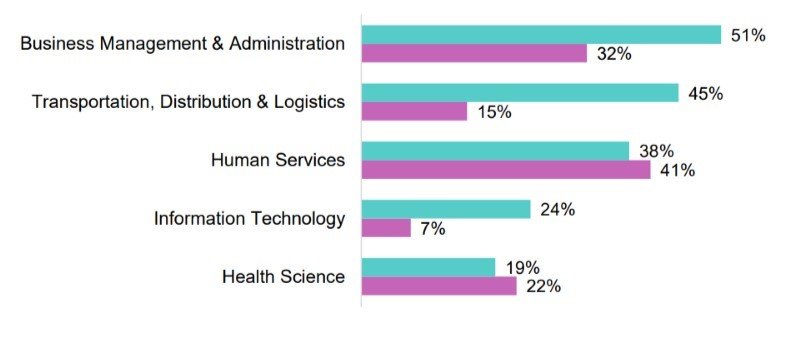
Chart showing Top 5 Career Clusters for NKY Students, based on Aptitude
The report is not meant to dissuade a student from any career options. “I would never tell a student not to pursue a career of interest, even if they don’t show a strong aptitude for it,” explained Jennie LaMothe. LaMothe presented the regional data and is the Director of Coaching and Operations for NaviGo, the event co-sponsor. “But it can be helpful for them to know they may have to work harder to build the necessary skills to excel in that pathway.”
The report highlighted gender differences in the career clusters. For example, the top aptitude for both females and males was in business management and administration. But among females, the next four were human services; transportation, distribution and logistics; information technology; and arts, audio/video technology, and communications, in that order. For males, the next four were transportation, distribution and logistics; human services; information technology; and finance, in that order. Interestingly, while 20% of males demonstrated an aptitude for finance, only 5% expressed an interest in it.
“When a student shows a high aptitude but low interest in a career, it often means they have not been exposed to it. It’s a great opportunity for schools to work with local employers to highlight specific career pathways,” LaMothe said.
Several Northern Kentucky employers are already working with schools to expose high-aptitude students to their careers. For example, Mubea, a manufacturing company in Boone County, promotes their apprenticeship programs through local schools. Rather than broadcasting their onsite information sessions to the general student population, they prepared a letter of invitation to the sessions and asked the schools to share it with students with high aptitudes for advanced manufacturing.
Similarly, St. Elizabeth Healthcare offers health-careers clubs onsite at schools, specifically intended for students with high aptitudes in healthcare. St. Elizabeth Healthcare is even forecasting where their openings will be over the next five years so they can entice high-aptitude students to explore those careers now.
“Everyone knows what a nurse does, and we certainly have a high need for nurses,” Brittany Sorrell, St. Elizabeth’s Manager of Workforce Development, shared at the summit. “But many don’t know what respiratory therapists, imaging professionals, EKG technicians, and similar professionals do. We know we are going to have a lot of openings in these areas in the future, so we want to start talking to the students with those aptitudes now.”
LaMothe noted that student data is protected by law. The schools cannot provide a list of students to employers but can reach out to the appropriate students on behalf of companies.
The full regional report is available upon request by emailing NKYWorks@NKADD.org or calling the NKY Works business resource line at 859.657.WRKS (9757). The NKY Works team can also connect interested employers and schools to NaviGo to learn more about YouScience.

The case for hiring our immigrants…
Hiring immigrants takes some extra work but can result in a dedicated, loyal workforce eager to advance the company's mission and profitability.
The numbers tell the story: We do not have enough residents in Greater Cincinnati to fill our open jobs. The scenario is going to get worse over the next decade as people in the Baby-Boom generation continue to retire at unprecedented rates. Like the rest of the country, where 65 percent of population growth has been from immigrants, our largest source of new residents is immigrants (City of Immigrants: The growth of Cincinnati and other cities depends on immigration (soapboxmedia.com).
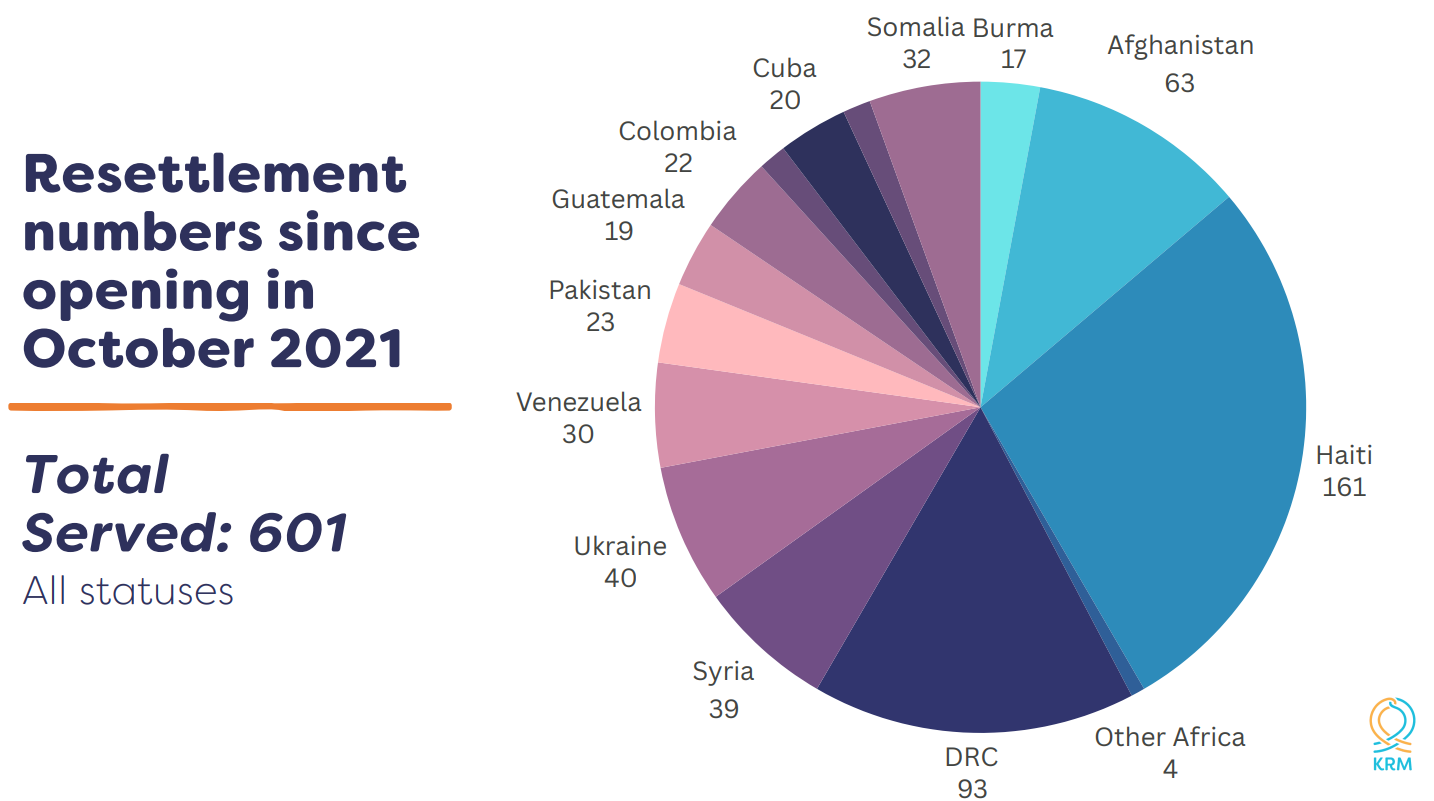
In Northern Kentucky, we have seen a substantial increase in refugees with 601 refugees resettling here since October 2021, per Ally Hermes of Kentucky Refugee Ministries (KRM) in Covington. This year alone, 420 people have resettled here. These numbers do not include immigrants who moved here under immigration statuses not served by KRM.
Connecting immigrants who want to work to jobs is a critical priority for the workforce-development community and was discussed at the quarterly Workforce Workshop on September 12. Perfetti Van Melle shared their experiences in recruiting Spanish-speaking workers for their distribution center. The process started by examining their internal readiness to embrace these workers.
“As employers, we tend to talk about whether or not the worker is ready for us,” shared Perfetti’s Krizia Cabrera-Toro. “But what if we flipped the question and asked, ‘Are we ready for them?’”
Perfetti took intentional measures before hiring non-English speakers. “Language is the first and most obvious barrier. We translated all our materials into Spanish. We posted our safety rules in both English and Spanish throughout our warehouse,” Cabrera-Toro said. They also promoted a bilingual staff member to a supervisory position and hired a certified interpreter to support the communication process.
She stressed the importance of using professional interpreters rather than “culturally taxing” Spanish-speaking employees to fill that role. “I am bilingual,” she said. “Can you imagine how many times I’ve been asked to translate at work? I’m happy to help, but I am not a trained, professional interpreter. I may not always translate accurately, especially when dealing with technical, job-specific language.”
Perfetti also offers free English courses to their Spanish-speaking workers, as well as free Spanish courses to their English-speaking workers. They conduct “implicit bias” training onsite to help workers examine the ways they may unintentionally be treating groups of employees differently than others.
Her biggest recruiting tip: Do not rely on online application materials. In addition to language barriers, many immigrants have limited digital literacy. They often don’t own computers, so they typically try to apply on their phones. They frequently give up on online applications without finishing them because the process is just too cumbersome.
FIESTA’s Theresa Cruz agreed. She recounted a recent job fair she hosted at FIESTA, a nonprofit organization providing support services to Northern Kentucky’s Hispanic community. “We had dozens of jobseekers and a good mix of employers at our event on Thursday evening, yet not one person successfully applied for a job, because all the applications were online. Lesson learned.”
Cruz said at her next event, they did not invite any employers, but instead invited volunteers to help jobseekers find and apply for appropriate jobs. “It was a much better use of everyone’s time, and many people successfully applied for jobs.”
Since opening January 2024, FIESTA has helped 1,681 Northern Kentucky adults from 12 Spanish-speaking counties. Thirty percent of them came to FIESTA seeking help finding a job. While FIESTA has had some success, she said there are many more immigrants who would like to get on the pathway to legal employment in our community.
Other best practices and tips shared by the presenters included:
Many immigrants learn about jobs through word-of-mouth. That often means their understanding of the job responsibility is limited or even mistaken. It is critical that jobs are clearly explained during the recruitment process.
Immigrants are more likely to use “WhatsApp” to communicate than they are the social media platforms more commonly used in the United States, like X, LinkedIn and Facebook. They likely won’t have existing accounts through which they can communicate about jobs.
Posting jobs on Indeed and other job sites will not attract immigrants. QR Codes do not appeal to them. They respond better to in-person, face-to-face experiences, preferably including a contact who can speak their language.
Once hired, immigrants frequently tell their family members and friends about job openings. They like to work together. Grouping them with other workers who speak their language increases their success and retention.
It is critical to recognize that there may be different cultural norms that come into play at work. One example cited at the workshop was about time orientation. Some cultures are less rigid about start and end times than the typical American employer. Clearly communicating all job expectations and the consequences of not following expectations is paramount to success.
Making sure all company leaders are invested in hiring immigrants and informed about the process is important. Frequently, the Human Resources Department is the gatekeeper. Changes in staffing in HR can derail immigrant-recruitment efforts if the entire organization is not invested in the process.
While hiring immigrants does require more upfront planning and effort, the presenters all agreed it is well worth the effort.
“You won’t find a more loyal and dedicated employee than an immigrant who feels they are respected and valued by their employer,” Cruz said. “They will be your best employees if you show them you appreciate them.”
Employers who want more information about hiring immigrants should reach out to NKY Works at NKYWorks@NKADD.org or 859.657.WRKS. We will connect you to resources to help develop an immigrant-recruitment process at your workplace.

Hiring based on aptitudes supports recruitment success & worker satisfaction
Aptitude assessments can help students better understand themselves as they consider career pathways for their future.
If you have been engaged with NKY Works and our five focus areas, you likely have heard about YouScience. YouScience is an aptitude assessment currently used in over 25 middle and high schools throughout Northern Kentucky. It has also recently been adopted by schools throughout Ohio. Aptitudes are our natural-born abilities, those things we do or “get” with little or no effort. Aptitudes are different than interests, which are easily influenced by our experiences and change frequently. Aptitudes are not skills, which can be built and honed through training and repetition. Aptitudes reflect our innate talents. Scientists tell us that aptitudes are stable by age 14.
You might think we would naturally pick careers that line up with our aptitudes, but that is not always true. Through the YouScience assessment, students often find they do not have an aptitude for the career pathways they are interested in. Conversely, they may find that they are not interested in the jobs that use their aptitudes. This misalignment can lead to multiple “false starts” and wasted time and money in education and training for mismatched careers.

YouScience is not the only aptitude assessment in the market, but it is the only digitized aptitude assessment, per the Ball Foundation’s research, according to Jennie LaMothe. Jennie is the Director of Coaching and Operations for NaviGo and works with school districts on the use of the assessment. “We recommended YouScience based on the thoroughness of the results each user receives. We believe that a student should first learn about who they are, before trying to figure out what they want to do, and YouScience gives an in-depth report of each user's aptitudes,” LaMothe said.
The assessment uses a series of brain games to measure performance across eleven areas: numerical reasoning, spatial visualization, sequential reasoning, inductive reasoning, visual comparison speed, idea generation, timeframe orientation, vocabulary, interpersonal style, work approach, and interest values. Users receive a personalized report detailing their aptitudes and how to identify them in others. It helps them understand how they work within a team, and how they align with their best-fit careers of over 600 options. By using YouScience, students can explore appropriate careers earlier in their high school years. They can seek out courses that build on their natural abilities. They can pursue part-time job opportunities and pre-apprenticeships that lead to full-time employment using a combination of their aptitudes and interests.
Companies are discovering the power of using YouScience assessment results as a recruitment tool. Working with local high schools, they are targeting students with natural alignment to their jobs and inviting them to participate in a wide-range of work-based learning opportunities. The goal is to let the student “tryout” the career as early as possible while also giving the employer time with the candidate before offering full-time employment.
On October 1, representatives from YouScience will be in Northern Kentucky to present assessment results of our regional talent pipeline. They will provide a detailed report on the aptitudes of current students from 17 different high schools in the region. They will be joined by LaMothe to discuss ways to engage students in career exploration. Employers such as St. Elizabeth Healthcare will also share their experiences using the assessment results.
The event is intended for employers and school personnel. It will be held at Gateway Community and Technical College’s Convening Center, 500 Technology Way, Florence, beginning at 8 AM. Registration is free and available at https://buytickets.at/nkyworks/1267067.
NaviGo is also presenting a free web-based session for parents who want to know more about the assessment on October 14 at 6 PM. Register at this link: https://forms.office.com/r/icPwMxUwpJ.

2024 Workforce Innovation awards celebrate success
Perfetti Van Melle was awarded the first annual Talia Frye Workforce Investment Champion award as part of the Northern Kentucky Workforce Investment Board (WIB) Annual Awards and NKY Works Forum, held on September 10 at the St. Elizabeth Healthcare Education and Training Center.

Perfetti Van Melle’s Krizia Cabrera-Toro (center) accepted the Talia Frye Workforce Investment Champion Award on behalf of the company. She is shown here with KY State Representative Kim Banta (left) and NKADD Associate Director of Workforce Development Correy Eimer (right).
The Talia Frye Workforce Investment Champion was named in honor of the late Talia Frye, a 20-year veteran of the Brighton Center, where she led many workforce initiatives aimed at continually improving the workforce ecosystem in Northern Kentucky. Perfetti Van Melle was chosen from among the nominations by a committee comprised of local business leaders and workforce development professionals. Also nominated were CVG Airport and Gateway Community and Technical College.
BE NKY Growth Partnership was selected as the Workforce Team of the Year, an award recognizing a team that works tirelessly to understand the regional workforce ecosystem, recognize potential impactful collaborations and champion workforce initiatives that will "move the needle." The other nominees for the award were the City of Covington Economic Development Department and the Jefferson Community and Technical College Adult Education team.

BE NKY Growth Partnership was selected as the 2024 Workforce Team of the Year. Accepting the award were President/CEO Lee Crume (far right) and Vice President of Economic Development Kimberly Rossetti (second from right). The award was presented by Representative Banta and current WIB Chairperson Dean McKay of Skilcraft.
The Workforce Innovator of the Year award was presented to Bill Weier of Mazak, in recognition of multiple initiatives aimed at attracting and retaining new employees. Liz Crenshaw of Arlinghaus Plumbing and HVAC was also a nominee for the award, which is earmarked for an individual at a local employer who challenges the “status quo” related to workforce development.

The 2024 Workforce Innovation Award was presented to William (Bill) Weier (right), who leads Human Resources at Mazak. Representative Banta and Dean McKay presented the award.
NaviGo’s Lorraine O’Moore won the Workforce Professional of the Year award for her work connecting high-school students to employers for work-based learning experiences. NaviGo is a division of Learning Grove. Also recognized as nominees for the award were Sarah Rust Crider of the KY Office of Employer and Apprenticeship Services and Jerry Wallace from the Council of Christian Re-entry Ministry.

The 2024 Workforce Development Professional of the Year was presented to Lorraine O’Moore (right), NaviGo’s Career and College Connector. She is shown with Representative Kim Banta and WIB Chair McKay.
The fifth award for the Workforce Volunteer of the Year was presented to Michelle Cestaric of Staffmark. Michelle was recognized for the many hours of volunteer time she has dedicated to the workforce ecosystem, including leadership to the WIB and NKY Works. Other nominees for the award were Dean McKay of Skilcraft, the current NKWIB Chairperson, and Ken Wocher. Ken is a retired workforce professional who now volunteers as a career coach at the Kenton County Public Library.
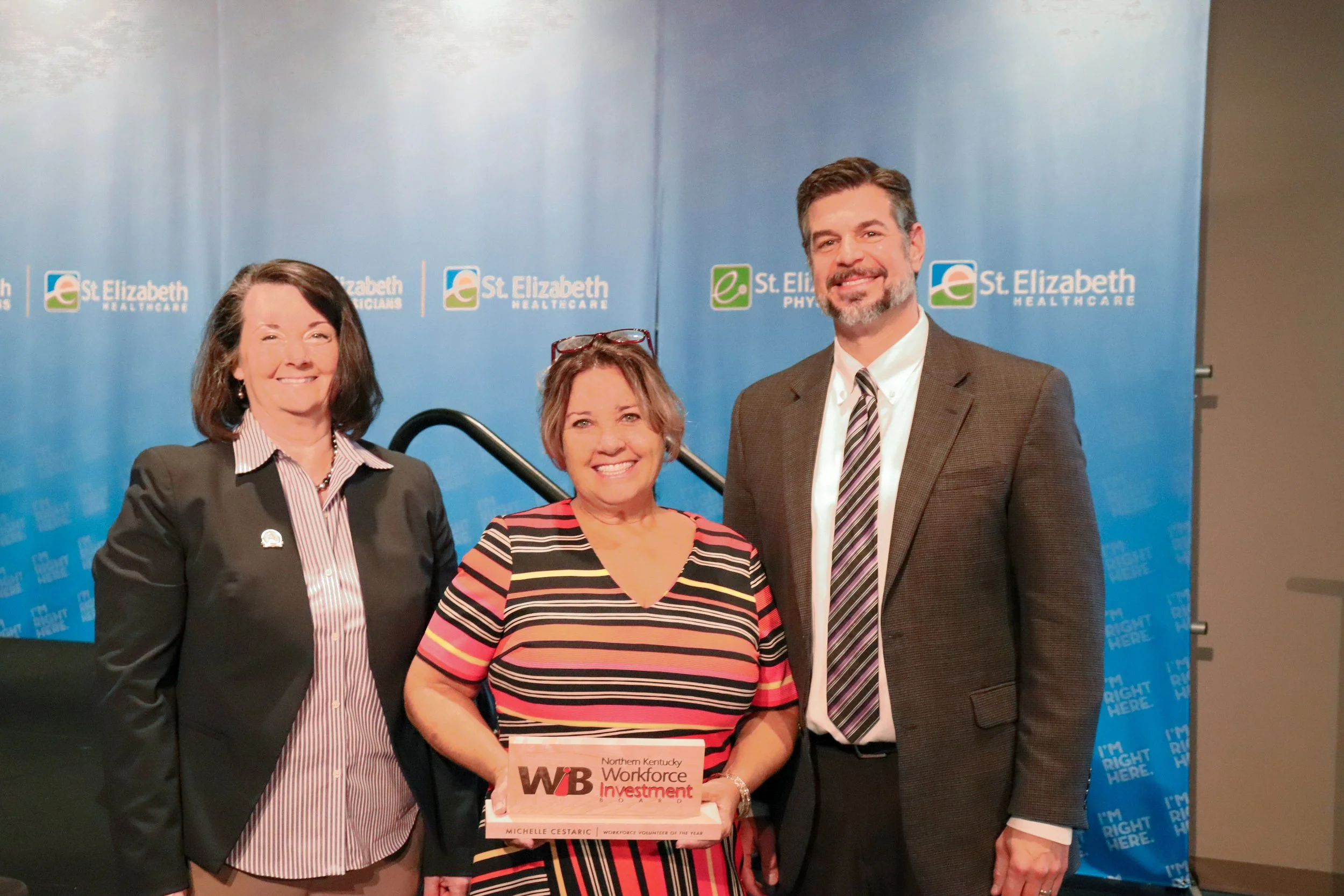
Michelle Cestaric (center) was selected as the Workforce Volunteer of the Year for her many contributions to workforce development in Northern Kentucky. Cestaric is Director of Sales for Staffmark. Shown here with Representative Banta and NKADD Associate Director of Workforce Development Eimer.
The accomplishments of all the winners and nominees are applauded and appreciated by the leadership of the Northern KY Workforce Investment Board and its partners, NKADD and NKY Works.

Where will we find our new talent?
Talent attraction is a critical workforce need in Northern Kentucky. This blog explores some options for short-term solutions.
The 120th Kentucky State Fair ended last Sunday (August 25). Volunteers from NKY Works helped staff a booth promoting Boone, Campbell and Kenton counties in support of our convention and visitor’s bureau, meetNKY. Volunteers agreed it was a great opportunity to “talk up” Northern Kentucky and our many amenities. Several also commented that many Kentuckians know very little about our region, and what is known is often gleaned while driving through on the interstate.
Our lack of identity is one of our hurdles for talent attraction. How should we promote our assets to entice people to relocate here to fill our many job openings? It’s a complex question, one that is currently being deeply explored by meetNKY and its partners along with the Commonwealth of Kentucky. Stay tuned for guidance and direction from those organizations at a later date.
In the meantime, local and national data can help us better understand why people relocate. Nationally, the US Census Bureau ranks the following reasons for moving:
Housing (41.6%)
Family (26.5%)
Employment (16.1%)
Other (15.9%)
Most relocation can be characterized as “moving,” which is changing residency within the same geographic market. People who “migrant” move from one geographic market to another one. Here are examples: If you change your residency from Kenton to Boone County, you are moving. If you change your residency from Covington to Louisville, you are migrating. It turns out that many Americas “move” but only 4.6% “migrate” every year.
That is even more true in Greater Cincinnati, where more than 70% of our population was born here. According to Janet Harrah of NKU’s Center for Economic Analysis and Development, people born in Greater Cincinnati generally stay here. Even when our residents migrant to another market, they typically go to a geographic market within two hours of here. “It’s really a zero net sum game,” Harrah said. “We get about as many migrants as we lose to other markets in the Midwest.”
But she highlighted one population segment that holds promise for talent attraction: young people aged 18 to 26. Locally, 25% of our young people leave Greater Cincinnati. Check out Harrah’s graphic below that shows where they go.

Map showing where young adults relocate
Studies show young people are enticed by high wages. They will migrate to an area, or they will remain in an area if the jobs and wages are good. This highlights the importance of connecting local students to good-paying jobs while they are still in school, so they don’t seek jobs elsewhere upon graduation. It also underscores the need for our wages to be competitive with other regions.
Another potential market for talent attraction is international migrants. In fact, international migrants are the top source for new residents in our area, shown in Harrah’s top ten list for in-bound migration to Greater Cincinnati. She noted international migrants are more likely to be aged 25-64 than the general population. They are here and ready to work. A large percentage of them came to Greater Cincinnati as students, and helping them find permanent employment here is a clear strategy for keeping them in our region.
1. International: 3,295
2. Cleveland, OH: 1,493
3. Dayton, OH: 1,333
4. New York, NY: 676
5. Memphis, TN: 538
6. Youngstown, OH: 433
7. Louisville, KY: 408
8. Washington Court House, OH: 392
9. Akron, OH: 349
10. Fort Wayne, IN: 310
There are other strategies for making Northern Kentucky more attractive to our immigrant population. It’s the topic of our upcoming Workforce Workshop on September 12 at 2:30 PM at the KY Career Center in Covington. You are invited to join us. The session is free and will feature local employers and support organizations. Register here.

Use data to tell your story
At our recent Partner for Success workshop, the NK Workforce Investment Board took a deep dive into the importance of data in workforce development. Learn more about resources available through BE NKY Growth Partnership and KYStats in this blog post.
“A lot of people don’t like data,” said BE NKY Director of Research David McAleese as he opened his discussion about using data in decision making. “I get where they are coming from. What I like is what data can do.”
McAleese spoke at the recent NKADD/NKWIB Partner for Success workshop with Sam Keathley, Sr. Workforce Analyst for KY-Stats. Both presenters described the role of data in creating a narrative to achieve workforce goals. “It’s all about how data can help build your story,” McAleese said.
He highlighted the difference between data-driven and data-informed decisions. Data-driven decisions are based almost exclusively on data, while in data-informed, the data is a tool that enables decision-makers to blend data with other insights and experience. While there are pros and cons of both approaches (see chart below), McAleese suggested most workforce practitioners would likely use data to inform their decisions.

Chart comparing data-informed to data-driven decision making
BE NKY maintains an open-sourced, interactive data dashboard called Atlas (atlas.northernkentuckyusa.com). The goal of the site is to enable Northern Kentucky business and community leaders to contribute to increased prosperity, growth, and equity by providing them with data, insights and a forum to inform their decision-making. The site publishes data from dozens of publicly available sources. A detailed tutorial about how to use the resources available at the site is also provided.
McAleese shared a list of 13 federal statistical agencies that are particularly useful to workforce-development professionals. The list, created in collaboration with Janet Harrah of NKU’s Center for Economic Analysis and Development, is found at the end of the blog.
When it comes to Kentucky, the Kentucky Center for Statistics (KYStats) is tasked with collecting accurate education and workforce data. One of the first Longitudinal Data System in the country, KYStats seeks to evaluate, conduct research, and provide information about education and workforce to state decision makers. It integrates data from the Kentucky Department of Education (KDE), the Council on Postsecondary Education (CPE), the Education Professional Standards Board (EPSB), the Kentucky Higher Education Assistance Authority (KHEAA), and the Kentucky Education and Workforce Development Cabinet. A quick video explaining more about the data and how its privacy and security are maintained is available at this link.
Keathley said that Kentucky is an especially good state for longitudinal data. “There is not a lot of migration out of Kentucky. By and large, people born here, stay here,” he said. “That means we can follow an individual from birth, through their entire educational history, into their career pathway and beyond. This creates a very stable data environment that we can have a lot of confidence in.”
One report Keathley highlighted is the multi-state postsecondary report. This interactive report connects postsecondary graduates from Indiana, Kentucky, and Ohio with in-state and out-of-state employment outcomes from Indiana, Kentucky, Ohio, and Tennessee. Users can explore the connection between employment outcomes associated with institutions, credential level, major group, specific major, student origin, and demographics.
Keathley’s team enjoys working with local businesses and organizations to address their data needs. Data support can be requested at their site. Companies can also reach out to NKY Works by emailing NKYWorks@NKADD.org with specific requests, and the NKY Works team will locate the best data source depending on the need and the timeline.
McAleese cautioned against comparing data from before the COVID-19 pandemic to current data. “Anything pre-2021 came from a different world,” he warned.
13 Recommended Federal Data Sites:
Bureau of Economic Analysis Bureau of Justice Statistics
Bureau of Labor Statistics Bureau of Transportation Statistics
Economic Research Service-USDA National Agricultural Statistics Service
National Center for Education Statistics National Center for Health Statistics
National Center for Science and Engineering Statistics
Office of Research, Evaluation and Statistics

Investing in communication skills makes good financial sense
In today’s tight labor market, retaining workers is of paramount importance. In last week’s Employer Best Practices Focus Area meeting, we heard that frontline workers want more communication with their leaders. Other studies confirm this, including:
A recent survey of 1,000 frontline workers found that 66% were satisfied with the level of communication they have with their employers. However, there was a large discrepancy between managers (74.2%) and non-managers (57.8%). This means that almost half of all frontline workers in non-managerial roles are not happy with the amount of communication they receive. (https://www.workvivo.com/blog/internal-comms-for-frontline-workers-guide/)
In today’s tight labor market, retaining workers is of paramount importance. In last month’s Employer Best Practices Focus Area meeting, we heard that frontline workers want more communication with their leaders. Other studies confirm this, including:
A recent survey of 1,000 frontline workers found that 66% were satisfied with the level of communication they have with their employers. However, there was a large discrepancy between managers (74.2%) and non-managers (57.8%). This means that almost half of all frontline workers in non-managerial roles are not happy with the amount of communication they receive. (https://www.workvivo.com/blog/internal-comms-for-frontline-workers-guide/)
Gallup reports that 51% of employees are watching for or actively seeking a new job. Typically, the decision to leave a job happens quickly, within a three-month period, and many who leave report that they may have stayed if there had been more intentional communication about their role in the company. Consider the following Gallup chart:

Source: https://www.gallup.com/workplace/646538/employee-turnover-preventable-often-ignored.aspx
It follows that investing in your managers’ communications skills makes good financial sense. Here are the top recommendations for improving manager’s communication skills:
Recruit for the future: Develop a talent pipeline by including internships and on-campus programs, thus creating long-term commitment to your company from the start.
Train beyond the mandatory requirements: It’s not enough to train for competency in the technical job requirements. Training must help managers build their interpersonal skills. Training is not a “one and done” experience; it must be ongoing and adaptive to the changing work environment.
Use mentors: Budding managers need someone to talk to about ongoing challenges. Senior leaders make ideal mentors and also can transfer institutional knowledge and skills to newer managers as their mentors.
Incentivize your frontline manager: Yes, this means pay a competitive salary. But it also means investing in them through tuition reimbursement, continued certification, and ongoing recognition programs.
If your company wants more information about developing ongoing manager training programs, NKY Works can connect you to local resources and experts who can address your specific needs. Contact us at 859.657.WRKS or NKYWorks@NKADD.org.

innovative hiring practices pay off for CVG
It seems like CVG (Cincinnati/Northern Kentucky International Airport) is always in the news – and rightly so. CVG has a $9.3 billion annual impact on our economy and has spurred billions of dollars of development in and around the airport. Accomplishments include:
CVG is the largest passenger airport in Kentucky, is one of the largest serving Ohio and Indiana, and is the sixth busiest cargo airport in North America.
CVG offers non-stop passenger service to more than 55 destinations in North America, Europe and the Caribbean. The airport serves about 9 million passengers per year.
Just the other week, CVG announced another new flight, offering nonstop service to Melbourne, FL, on Allegiant Air. The flight will commence on November 15.
The airport is the only dual-cargo hub airport in North America, serving as the second-largest location in the world for DHL Express, its global superhub for the Americas, and the largest single-site operation for Amazon, home to its primary hub for Amazon Air.
The airport is the largest station in Atlas Air’s global network and serves many other cargo-focused carriers, including ABX Air, Kalitta Air, and others. CVG is the 12th largest cargo airport in the world, based on cargo tonnage.
For NKY Works, CVG is about jobs – good jobs serving a wide array of skill levels. In fact, CVG is responsible for 49,000 direct and indirect jobs in the region with more than 70 employers on their campus. But like all employers, CVG faces workforce challenges, including a lack of workers with needed skill sets, higher turnover in certain positions, and difficulty filling certain shift openings, such as weekends and third shifts. The airport is, after all, a 24/7/365 operation. CVG has been intentional and innovative in addressing these challenges. Here are some examples:
It seems like CVG (Cincinnati/Northern Kentucky International Airport) is always in the news – and rightly so. CVG has a $9.3 billion annual impact on our economy and has spurred billions of dollars of development in and around the airport. Accomplishments include:
CVG is the largest passenger airport in Kentucky, is one of the largest serving Ohio and Indiana, and is the sixth busiest cargo airport in North America.
CVG offers non-stop passenger service to more than 55 destinations in North America, Europe and the Caribbean. The airport serves about 9 million passengers per year.
Just the other week, CVG announced another new flight, offering nonstop service to Melbourne, FL, on Allegiant Air. The flight will commence on November 15.
The airport is the only dual-cargo hub airport in North America, serving as the second-largest location in the world for DHL Express, its global superhub for the Americas, and the largest single-site operation for Amazon, home to its primary hub for Amazon Air.
The airport is the largest station in Atlas Air’s global network and serves many other cargo-focused carriers, including ABX Air, Kalitta Air, and others. CVG is the 12th largest cargo airport in the world, based on cargo tonnage.
For NKY Works, CVG is about jobs – good jobs serving a wide array of skill levels. In fact, CVG is responsible for 49,000 direct and indirect jobs in the region with more than 70 employers on their campus. But like all employers, CVG faces workforce challenges, including a lack of workers with needed skill sets, higher turnover in certain positions, and difficulty filling certain shift openings, such as weekends and third shifts. The airport is, after all, a 24/7/365 operation. CVG has been intentional and innovative in addressing these challenges.
Here are some examples.
Recruitment and hiring: CVG is working with the Life Learning Center in hopes to hire transitional workers who have graduated from LLC's program. They also are partnering with Kentucky Refugee Ministries to hire folks from newly arrived communities and to welcome them into the CVG community. Working with both of these groups has allowed CVG to update and improve their onboarding process to make hiring easier for unique populations.
Benefits: CVG recently began offering childcare support to its direct employees, taking advantage of Kentucky’s ECCAP grant. In an effort to be more inclusive, CVG extended an offer of assistance not only to employees residing in Kentucky, but also for employees commuting from Ohio and Indiana..
Inclusive workforce: An example of CVG's commitment to creating a diverse and inclusive workforce is evident in the way they are welcoming New Americans into their workforce. A recent initiative provided an opportunity to make their onboarding more language-accessible through partnerships with interpreters, document translation, and new technology solutions.
Skill and Career Advancement: CVG is blazing trails by providing work-based learning opportunities to school-aged prospective workers. They are working with high schools and colleges/universities to provide co-ops, internships, pre-apprenticeships, and onsite classes and tours. They are also encouraging the 70+ employers across the airport campus to participate in such upskilling and training opportunities.
New Providers: Even though the airport itself doesn’t hire aircraft mechanics (that’s the role of the airlines or other third-party companies), they knew their partners were growing jobs in this area and have a need to ensure a pipeline of aviation mechanics to be successful. CVG has worked with its partners, especially FEAM Aero, to recruit Epic Flight Academy, for instance, to build an aircraft mechanic school right on the airport campus. That school opened in early 2024 and has the capacity to accommodate 250 students.
“Implementing new initiatives can sometimes be challenging,” Vice President of Human Resources Gina Stough said. “To prepare for our most recent experiences, we took the time and effort to reach out to local subject matter experts, like Kentucky Refugee Ministries, to educate ourselves on best practices. With their help, we provided resources to our frontline supervisors and managers to help ease any potential hesitation with welcoming new populations with English learning needs into our workforce. Through our experience, we learned that onboarding global communities with different levels of English proficiency and cultural backgrounds is not as challenging as many thought it would be. We gave ourselves permission to try something new, recognizing we might make some mistakes, and to learn from this. We are grateful for the opportunity to welcome new communities and are really pleased with the results so far.”
CVG is obviously a larger employer, but many of the innovations they have implemented are appropriate for small to mid-size companies, too. If your company is stymied by workforce challenges, reach out to NKY Works. We can connect you to resources and partners who can address your unique needs. Call us at 859.657.WRKS or email us at NKYWorks@nkadd.org.

Work environment beats culture for frontline employees
The workforce shortage is top-of-mind for employers of all sizes. Currently, there are four people for every five job openings, giving people the power of choice in the job selection process. Retaining workers has become an increasing challenge with costly consequences for companies with high turnover rates. The challenge is especially daunting with frontline workers who can easily jump from one employer to another.
According to Ben Green of TrailPath Workplace Solutions, 45% of today’s frontline workers feel they are either declining or just surviving in their positions. Green presented data from his company’s 5,000+ employee surveys from companies across the country to NKY Works Focus Area 5 – Employer Best Practices on July 16. He said the turnover rate for frontline workers is 47% and even higher – as high as 400% - in the first 90 days of employment.
“We hear a lot about workplace culture, and it is important. But companies often invest a lot of time and energy to build a good culture. What workers tell us, however, is that what they experience on a daily basis on the job floor does not align with the culture,” he said. “If the culture is great, but the work environment is bad, they will leave.”
Communication is very often the problem. Green has found employees often don’t understand why their company follows certain policies and procedures. Usually there are very good reasons behind the policies, and company leaders can easily explain the “why” behind them. But the explanation is not getting to the frontline staff.
“Across the board, employees tell us they want more interaction with their leaders. They want to see them, they want to be able to ask questions, and they want to feel ‘seen’ by them,” Green said.
Green recommends individual plans to address workplace issues. “With four generations now working side by side and changing attitudes about the role of work in people's lives, it is critical that companies view their workers as individuals who have a lot to offer and a lot of expectations at the same time.”
Green, a long-time Northern Kentucky resident, and his partners started TrailPath Workforce Solutions in January. Green previously spent nearly 20 years in the logistics industry, working for Uber Freight and LeanCor Supply Chain Group. Learn more about TrailPath at https://www.trailpathws.com/
The Employer Best Practices Focus Group next meets remotely on Tuesday, August 20 from 3-4 PM. To join the meeting, email us at NKYWorks@NKADD.org to receive the link.
The workforce shortage is top-of-mind for employers of all sizes. Currently, there are four people for every five job openings, giving people the power of choice in the job selection process. Retaining workers has become an increasing challenge with costly consequences for companies with high turnover rates. The challenge is especially daunting with frontline workers who can easily jump from one employer to another.
According to Ben Green of TrailPath Workplace Solutions, 45% of today’s frontline workers feel they are either declining or just surviving in their positions. Green presented data from his company’s 5,000+ employee surveys from companies across the country to NKY Works Focus Area 5 – Employer Best Practices on July 16. He said the turnover rate for frontline workers is 47% and even higher – as high as 400% - in the first 90 days of employment.
“We hear a lot about workplace culture, and it is important. But companies often invest a lot of time and energy to build a good culture. What workers tell us, however, is that what they experience on a daily basis on the job floor does not align with the culture,” he said. “If the culture is great, but the work environment is bad, they will leave.”
Communication is very often the problem. Green has found employees often don’t understand why their company follows certain policies and procedures. Usually there are very good reasons behind the policies, and company leaders can easily explain the “why” behind them. But the explanation is not getting to the frontline staff.
“Across the board, employees tell us they want more interaction with their leaders. They want to see them, they want to be able to ask questions, and they want to feel ‘seen’ by them,” Green said.
Green recommends individual plans to address workplace issues. “With four generations now working side by side and changing attitudes about the role of work in people's lives, it is critical that companies view their workers as individuals who have a lot to offer and a lot of expectations at the same time.”
Green, a long-time Northern Kentucky resident, and his partners started TrailPath Workforce Solutions in January. Green previously spent nearly 20 years in the logistics industry, working for Uber Freight and LeanCor Supply Chain Group. Learn more about TrailPath at https://www.trailpathws.com/
The Employer Best Practices Focus Group next meets remotely on Tuesday, August 20 from 3-4 PM. To join the meeting, email us at NKYWorks@NKADD.org to receive the link.
